Thursday, October 29, 2015

Distinguished Young Women


When I was a Junior in high school, I entered a program to compete for the opportunity to win college scholarships. It was called Distinguished Young Women of America, and was essentially equivalent to a scholastic Miss America. I was drawn to the program for the opportunity to perform and discuss what actions I had taken to better myself and my community, and the scholarships were of course an incentive. Upon entering at the local level, I never thought that I would win, let alone continue to advance through multiple stages of the competition. Finally, I was invited to the national stage as one of fifty young women chosen to be a national spokesperson for Distinguished Young Women (DYW). My year and half as a DYW representative required me to have numerous speaking engagements: some of which were to emphasize the benefits of the program to potential supporters, in the hopes of inviting new donors to the program, others included hosting leadership seminars for young children, to instill the concept that with determination and hard work they can achieve anything. 

As time progressed, I grew so passionate about the DYW program and what it stands for that every time I publicly spoke, it felt natural and meaningful. However, I recognize that when I am not as familiar with or passionate about a topic, my speaking tends to seem much less natural. My discomfort is clear through my forced hand gestures and my lack of conversational tone while speaking. In order to combat this and become a better public speaker, I need to practice enough to achieve the same level of comfort I have while discussing the DYW program. Once I have done so, my words will be able to flow freely and my audience can better sense my passion for the topic.

Thursday, October 22, 2015

Happy Birthday

Do you remember the days when a birthday was a huge ordeal, with multiple weeks of planning  beforehand to ensure that the notable day in someone's life was all that it could be? Before technology played such a strong role is our daily lives, actions such as wishing someone a happy birthday required some degree of work. Whether it was an in-person visit, a written letter, or even a phone call, the action demonstrated a genuine desire to show care for the individual having a birthday and that they are valued on their special day. As society has progressed, so has technology, and this has greatly impacted something which had been so meaningful for so long: birthdays. Think about the actions that you, and quite likely the majority of Americans, take to contribute to someone's birthday.

*open laptop, log on to Facebook, find their page, post "happy birthday," close laptop*

I believe that it is fair to assume that many of us are guilty of this form of birthday acknowledgement. This action correlates to the way society is progressing as a whole: becoming more efficient with less effort exerted; however, in doing so, the sense of care is eliminated from an action, much like virtually wishing someone a happy birthday.

This paradigm shift is significant because it is a reflection of how society has shifted as a whole, but focuses on one element which is particularly relevant to our generation. It is evident that as technology has made vast improvements it has also hindered other aspects of life, such as communication. Ultimately, my central claim for this piece is that the implementation of advanced technologies in society has made simple communication more impersonal and less meaningful, as apparent through the transformation of one simple wish: "happy birthday." 

http://www.cnn.com/2013/02/12/tech/web/tech-romance-evolution/
https://www.psychologytoday.com/blog/happiness-in-world/201006/the-effect-technology-relationships
http://www.edudemic.com/the-4-negative-side-effects-of-technology/
http://finance.yahoo.com/blogs/daily-ticker/facebook-effect-social-network-changed-world-122656206.html
http://time.com/3751376/happy-birthday-wishes-facebook-twitter-etiquette/

Thursday, October 15, 2015

Paradigm Shift

John Locke once described the human mind as a "tabula rasa," or a blank slate. At the root of this statement is essentially that when we are born, our mind is a clean surface, susceptible to alterations. What alters our tabula rasa is a conglomeration of everything that we experience and encounter in our life times. Each event, regardless of how minute, leaves a mark on our tabula rasa; this jumbled series of alterations is what defines who we are. One major part of who we are is the environment in which we were raised. The communal series of facts we have grown to understand, because of their commonality, has become a part of us. In conjunction, these facts become a common theory, which is recognized as a paradigm.

We find comfort in our contemporary paradigm because it encompasses what is acceptable and what we strive to be. However, what is deemed acceptable and what fits into today's paradigm does not reflect the paradigm(s) of history. I have discovered two paradigm shifts to be particularly interesting: young children's creativity, and the roles of eighteen-year-olds.

A child's degree of creativity is directly correlated to how they draw a bird, I know this might seem like an interesting concept, but let me explain. Historically speaking, a child's sense of the world was drawn from real experiences; however, today's prevalence of media has conflicted with their opportunities to gain first-hand knowledge of the real world. A child in kindergarten drew the following image
It's clear that despite his limited art skills, he still strove to illustrate a realistic bird. However, as that child grows older, and media has a more prominent role in his life, he begins to depict birds like this
Because of the paradigm shift in children's relationship with media, it has stimulated a major shift in their sense of creativity as they grow older. 

.................................................................................................................................................

Another paradigm shift which I find very interesting is the roles of eighteen year olds. It is particularly relevant because many of us are eighteen, so we have a common understanding of how we are expected to fit into society. Historically, at eighteen people had vastly different requirements to thrive. As adults, many people were no longer being educated and were in the work force, as they had already been for several years. Personally, I view myself as being very young and having a husband at this age is out of the question. However; many women were already married by eighteen which is a major shift in expectations; indirectly, this also certainly influences a shift in family dynamics. 

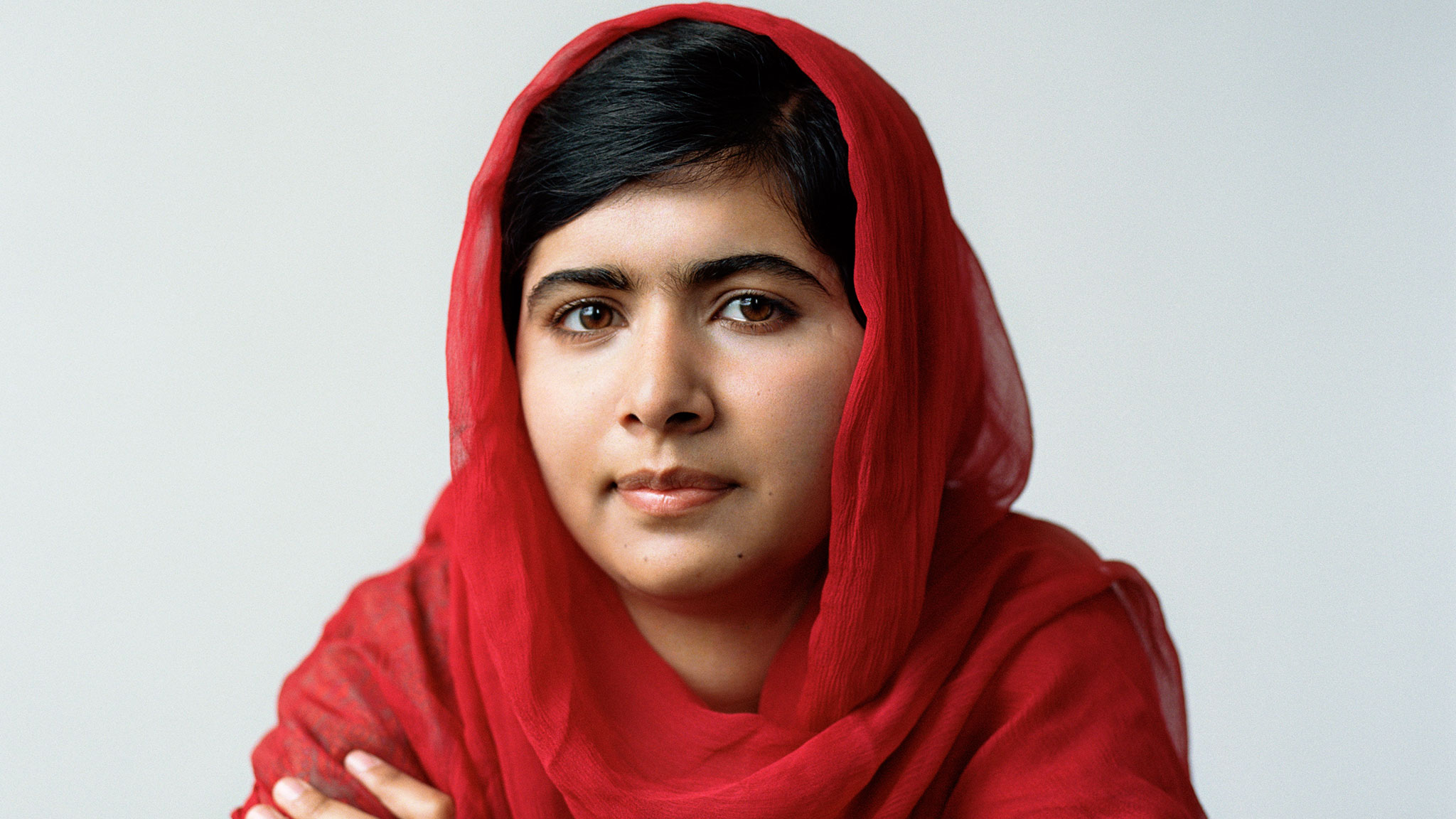
Something else that is prevalent in modern society are outliers to the commonly accepted roles of eighteen year olds. We see people like Malala Yousafzai and Kylie Jenner, who both recently entered adulthood.

Malala is known for her dynamic action in the fight for educational rights for young girls, despite having been shot. She has made a steady rise to fame and has been recognized numerous times on the global stage. It is baffling to me that we are the same age and she has already accomplished so much in her lifetime.


Kylie Jenner is known for... well, quite honestly I am not entirely sure. As a half member of the Kardashian clan, she has made a steady rise to fame because as a family they were already in the American spotlight. Individually, much of her attention is derived from her money and massive, medically enhanced lips.

It is intriguing to analyze the roles of eighteen-year-olds in a historical context and understand the major paradigm shifts the roles underwent throughout the years to reach modern expectations. The element of outliers, such as Malala Yousafzai and Kylie Jenner, adds an addition layer to the complexity of contemporary eighteen-year-olds. 

Images credited to 

Thursday, September 17, 2015

A "Plunge" From Conversation

A teenager in contemporary American society can surly be found with their cell phone glued to their hand; anxiously awaiting a "ding" as a symbol of engagement in conversation. We are in a time when this is the norm, and because of the comfort in knowing virtual conversation is always available, we fail to pursue face-to-face interactions. I find myself just as guilty of this as the next person; when I am walking around campus, to escape from the awkwardness of the being alone, I absentmindedly pull out my phone and text my friends, opposed to striking up a conversation with someone new. In failing to introduce myself to another person in the same awkward conundrum, I potentially lose the opportunity to begin a long lasting relationship. Losing the chance to make connections is just one of the downfalls of today's technology based world.
Think way back to the beginning of the semester when we had just begun to delve into "Rhetoric and Civic Life." We were met with terms such as shared enterprise and civic infrastructure, neither of which seemed particularly interesting to me personally. However, in chapter two one sentence in particular stuck out to me with a hint of relevance: "our flight from conversation can mean diminished chances to learn skills of self-reflection." From this sentence I began to recognize that the contemporary reliance on virtual communication is not only lazy, but essentially self-destructive. Being raised in a time when communication via the internet or phone is constantly available, I failed to accept the repercussions of primarily non face-to-face contact.
Conversation with another person, in a sense, also requires dialogue with oneself. In-person communication requires investment in what the other person has to say while simultaneously self-checking and developing responses: a complexity that virtual communication lacks. Without this extra level of complexity, conversations can only be so deep. In a society in which conversations remain and the surface level and do not require self reflection, I believe what the texts refers to as a "flight from conversation" is more of a "plunge."

Thursday, September 3, 2015

oklaHOMEa


Where you come from is the foundation of who you are as a person; the people and surroundings blend to mold your character. From the southern charm, to the sweeping diversity offered by a college town, Stillwater, Oklahoma has allowed me to develop to whom I am meant to be. Here in State College, I have the unique opportunity to foster two occasionally contrasting cultures and further mold myself as I grow and learn in a new setting.

I plan to use my RCL blog to invite others to join me as I reflect on my eighteen years in Oklahoma. It seems that everyone I meet is from "just outside of Philly," or a similar location. I can promise that their preconceived idea of what Oklahoma is like is not reflected in most of my experiences, although I have to admit that I have encountered my share of stereotypical Oklahomans, including a kid who drove his giant tractor to school. In the short time that I have been here I have already been overwhelmed with the cultural variances and I am thrilled to delve into them and share what I have observed from an interesting point of view while I attempt to make Happy Valley my home.

Throughout the time that I am constructing my blog I plan to address numerous topics, primarily based off of the conversations that I have had since arriving in State College. I have noticed dramatic cultural differences, which I plan to discuss. Also, the simple, and occasionally surprising questions that people ask me, beginning with the most basic question: "where is Oklahoma?" which I believed I am asked far too frequently. Obviously, if people are unfamiliar with Oklahoma's location, then they certainly do not know what it has to offer. Being born and raised in Oklahoma has given me the opportunity to discover the eclectic hidden gems around the state. We do not have any big name tourist attractions to bring in floods of people, but through exploration I am familiar with many unique attractions back home, which I cannot wait to write about.

 The difference that 1223.85 miles can make is incredible, read my Passion Blog to find out how.


Friday, August 28, 2015